Blog · 3 Nov 2026
Planning a wardrobe: sliding or hinged, and what goes inside
A wardrobe is the largest piece of furniture in most bedrooms, and the one you open every morning. A good one fits the room, holds what you actually own, and still closes smoothly years later. Here is how to plan one.
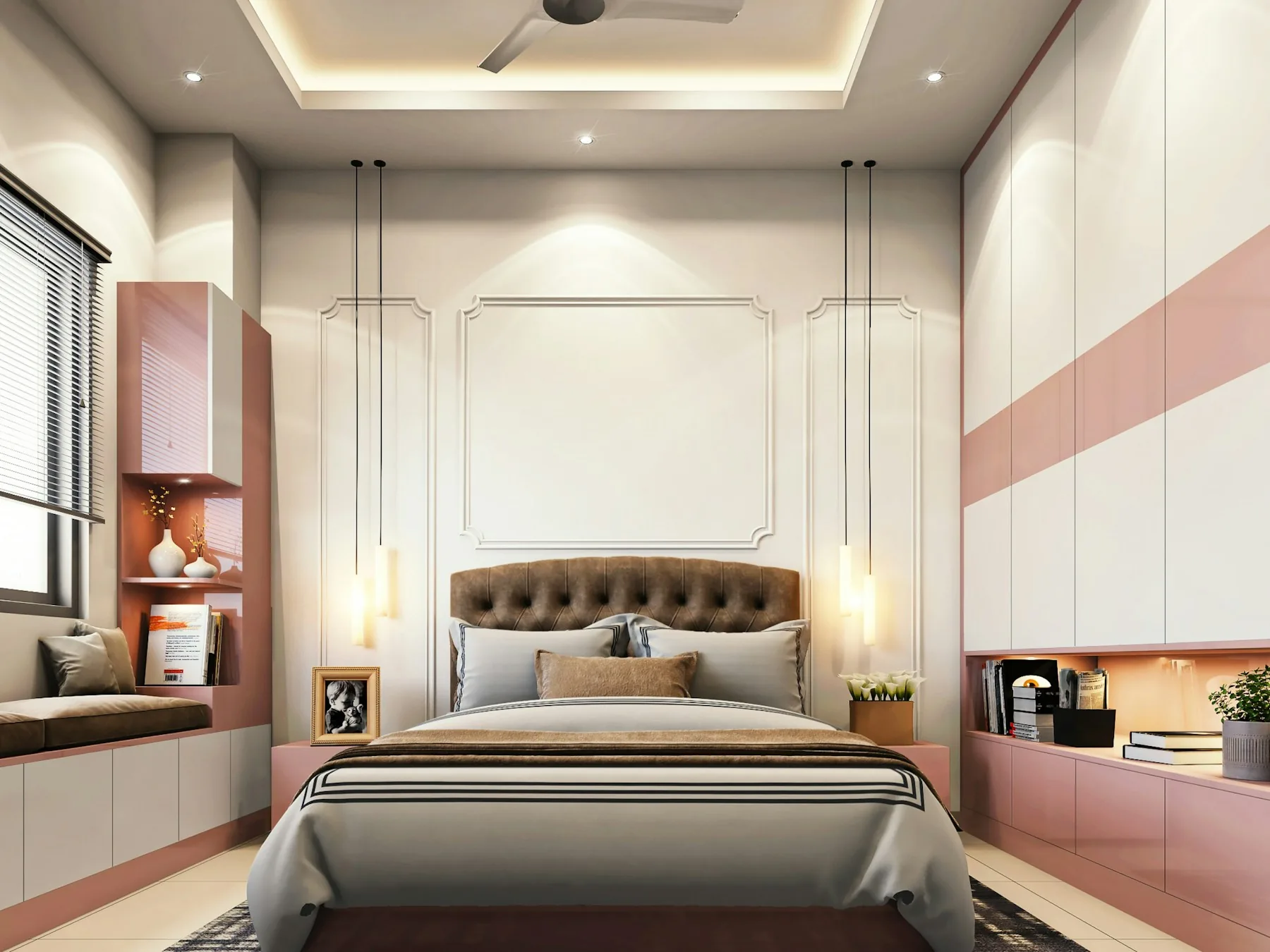
The short answer
Choose hinged doors if you have clear floor space in front of the wardrobe, and sliding doors if you don't. Plan the inside around what you own, not around a standard drawing. Use moisture-resistant board on walls that face a bathroom or an outside wall, and spend on good hinges, channels and sliding tracks, because hardware is what fails first.
1. Hinged or sliding?
- Hinged doors open fully, so you see everything at once, and they cost less. They need roughly the width of one shutter in clear space in front, so the bed or a dresser mustn't be in the way.
- Sliding doors need no space to open, which suits smaller bedrooms. But you only ever see part of the wardrobe at a time, and the track needs good hardware and occasional cleaning.
In many Ahmedabad flats, where the bed sits close to the wardrobe wall, sliding doors are the practical choice. In larger rooms, hinged doors give easier access.
2. Size and depth
Hanging clothes need enough depth for a hanger to sit across, so a hanging wardrobe is usually about 2 feet deep inside. Go floor to ceiling where you can: the top section, or loft, is ideal for suitcases, quilts and seasonal clothes. Check for beams, AC pipes and switchboards on the wall before the size is fixed.
3. Plan the inside around what you own
Before the drawing, count roughly what you have: long hanging (sarees on hangers, kurtas, dresses), short hanging (shirts, trousers), folded clothes, and shoes, bags and accessories. Then mix the sections to match.
- Long hanging for full-length dresses, kurtas and sarees on hangers.
- Double hanging, with two rods, one above the other, for shirts and trousers. It nearly doubles the space.
- Shelves for folded clothes. Keep them shallow enough that stacks don't topple.
- Drawers for innerwear, accessories and small items. Deep drawers suit saree storage.
- A locker, if you want one, placed at a comfortable height and planned in from the start.
- Pull-outs for trousers, ties, belts and shoes, if the budget allows.
4. Board and finish
Walls that back onto a bathroom or face the outside can bring damp through, so ask for moisture-resistant board, such as BWR or BWP grade plywood, on those sides. On the shutters, laminate is the most practical finish. Acrylic and PU look glossier but show scratches more. Mirror shutters make a small room feel bigger. Veneer brings real wood grain but needs polishing.
5. Hardware decides how long it lasts
Hinges, drawer channels and sliding tracks do all the work. Soft-close hinges and channels from an established brand cost more and are worth it. For sliding wardrobes, the track system matters most: a cheap one sags and jams within a few years. Get the hardware brand written in your quote, as our guide on what decides the cost of a home interior explains.
6. Lights and points
Sensor lights that switch on when a shutter opens make a deep wardrobe much easier to use. They need a power point, so plan it during the electrical stage, before the wardrobe goes in. See the stages of a full home interior for where that fits.
7. Leave a gap and a way to clean
A small gap at the ceiling or a closed loft top stops dust collecting, and a raised base, or plinth, keeps the bottom away from floor mopping water. Both are small details that make the wardrobe last.
We'll measure each bedroom, look at what you need to store, and show you the wardrobe in 3D before it's built. The site visit in Ahmedabad is free.
Get a free consultation